
Maruti Suzuki India Ltd has launched the Wagon R, India's first flex-fuel car, capable of running on any blend of ethanol and petrol from E20 to E100, aligning with national energy security and sustainability goals.
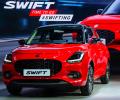
Maruti Suzuki India (MSIL) reported a mixed Q1 FY27, with record quarterly sales driving strong revenue growth, but operating performance was below expectations due to higher commodity and other costs impacting margins. Brokerages anticipate sustained sales growth for the company in the current fiscal year, supported by new launches, robust demand, and significant capacity expansion.

Maruti Suzuki, India's leading passenger vehicle manufacturer, is experiencing robust growth in the June quarter, driven by a recovery in the entry-level segment, easing supply constraints, and significant market share gains. Despite potential headwinds from El Nio, analysts remain optimistic about the company's future performance.

Indian benchmark indices, Sensex and Nifty, closed flat on Friday, with elevated crude oil prices due to geopolitical uncertainties and a rebound in US Treasury yields making investors cautious and preventing a decisive market rally.

Maruti Suzuki Chairman R C Bhargava is pushing for increased government incentives for biogas-powered vehicles over hybrids, emphasising their net-zero carbon emissions and the valuable organic manure they produce, while also advocating for continued GST benefits for electric vehicles.

Maruti Suzuki has discontinued its Ignis hatchback due to weak sales and a shift towards SUVs, while simultaneously facing supply chain issues for its popular S-Presso and WagonR models, leading to booking halts at some dealerships.

Maruti Suzuki India's shares gained over 2.5 per cent after a strong March-quarter performance, with analysts maintaining a positive medium-term outlook driven by buoyant domestic market volumes, capacity expansion, and export growth, despite anticipated near-term margin pressures from higher commodity prices and startup costs.

Indian markets on Dalal Street rallied sharply as easing tensions in the US-Iran conflict and stable oil prices boosted sentiment. Track Nifty 50 and BSE Sensex performance and key global triggers.

Indian benchmark indices Sensex and Nifty experienced a significant tumble in early trade, primarily driven by heavy selling in HDFC Bank following its quarterly earnings and a sharp spike in Brent crude oil prices due to escalating tensions between the US and Iran. Track Sensex, Nifty

Indian benchmark indices Sensex and Nifty rallied in early trade, driven by a significant decline in Brent crude oil prices, which fell below the USD 73 per barrel level, and positive trends observed across most Asian equities.

Indian stock market benchmark indices Sensex and Nifty closed nearly one per cent higher, extending their winning streak for a second day. This rally was driven by softening crude oil prices, positive geopolitical developments, and significant buying in blue-chip IT stocks, despite a broader global tech sell-off.
Indian benchmark indices Sensex and Nifty rallied in early trade, driven by a significant decline in crude oil prices and positive developments on the geopolitical front, alongside strong performance in blue-chip IT stocks. Track Sensex, Nifty on July 2, 2026

Indian benchmark indices Sensex and Nifty rebounded in early trade, recovering from previous losses, driven by softening crude oil prices and renewed buying interest in blue-chip stocks. Analysts note that the fall in Brent crude below USD 77 has removed significant macro headwinds for India, contributing to market stability.
Indian benchmark stock indices, Sensex and Nifty, advanced for the second consecutive day, driven by softening crude oil prices and a positive trend in global markets. Despite some profit-taking in IT and metal shares, auto stocks outperformed, contributing to the overall gains.

History may remember Takaichi Sanae not as the leader who simply accelerated Japanese rearmament, but as one who governed during Japan's transition from an industrial-age security model to a post-industrial strategic member of the global order, points out Varun Arya.
Maruti Suzuki sold more cars than ever before, earned more money, and saw many first-time buyers choosing small cars again.

The BSE benchmark traded 44.43 points up at 76,521.93, and the Nifty quoted 17.20 points higher at 24,048.85. Track Stock markets on May 26.

Indian benchmark indices Sensex and Nifty climbed in early trade, driven by a significant drop in crude oil prices following reports of a potential 60-day ceasefire extension between the US and Iran, coupled with positive global market trends and buying in IT stocks.

Indian equity benchmark indices Sensex and Nifty experienced a significant tumble in early trade, with the Sensex tanking nearly 700 points, driven by uncertainty surrounding US-Iran negotiations, a fresh spike in crude oil prices, and persistent foreign fund outflows.

Indian benchmark indices Sensex and Nifty closed lower, snapping a two-day rally, as a spike in crude oil prices, triggered by reports of fresh US military operations in southern Iran, dampened investor sentiment and reignited fears of renewed energy supply disruptions.

'If the targets become unscientific and unjust, Then, just to meet CAFE-III regulation, a small car -- which produces a very low absolute carbon dioxide -- will have to be discontinued.'
Indian equity benchmarks Sensex and Nifty surged nearly 1 per cent, driven by strong earnings reports from FMCG and auto sectors, alongside a rally in Asian markets and signs of de-escalation in geopolitical tensions.
Indian equities on Dalal Street saw volatility as global market trends and weak rupee impacted investor sentiment. Track Sensex, Nifty50 movement and key market drivers for May 5, 2026.

Companies with "gas guzzlers" are trying to set up the wrong narrative against small cars getting relaxation in the proposed corporate average fuel efficiency (CAFE-III) norms on the basis of weight, Maruti Suzuki senior executive officer corporate affairs Rahul Bharti said on Monday, bringing to the fore deep division among carmakers regarding the upcoming rules.
Indian stock markets experienced a significant rally following the announcement of a US-Iran ceasefire, coupled with a drop in crude oil prices. The Sensex and Nifty both closed nearly 4 per cent higher, mirroring gains in global markets.

The stock of the country's largest passenger vehicle maker, Maruti Suzuki India (MSIL), has been hitting successive all-time highs over the past three trading sessions. The rally in the scrip has helped it notch over a 21 per cent gain since the start of February, outperforming the National Stock Exchange Nifty Auto Index. The gains for the leader of small passenger cars have been more recent, as the company still trails the Nifty Auto over one- and two-year periods.

Indian equities on Dalal Street saw volatility. Track Sensex, Nifty50 movement and key market drivers for Feb 25, 2026.
Indian stock market benchmark indices Sensex and Nifty experienced a significant drop in early trade due to rising crude oil prices, bearish global market trends, and continuous foreign fund outflows.
Benchmark indices Sensex and Nifty ended marginally higher on Wednesday as a sharp decline in IT blue-chip stocks restricted the rally in the markets.
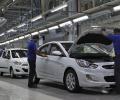
Domestic passenger vehicle dispatches from companies to dealers rose 13 per cent year-on-year to 449,616 units in January with demand remaining robust owing to GST rate rationalisation and subsequent dip in prices, industry body SIAM said on Friday.
Stock market benchmarks ended with losses for the third straight session on Wednesday as heightened geopolitical tensions, weak global peers and persistent foreign fund outflows unnerved investors.
Indian equity markets experienced a volatile trading day, with the Sensex and Nifty closing almost flat. Market sentiment was influenced by global cues, US-Iran talks, and profit-booking activities.

Stock market is gearing up for an eventful week ahead where key triggers such as quarterly earnings from corporates, the US Fed interest rate decision and the upcoming Union Budget for 2026-27 would grab the limelight, analysts said.

The country's largest carmaker Maruti Suzuki India is recalibrating production of its upcoming model e-Vitara due to the shortage of rare earth magnets, industry sources said. The auto major is looking to produce around 8,000 units of the model by September as against the earlier stated plan of rolling out over 26,000 units during the period.

Car purchases in India are largely limited to the top 12 per cent of households with an annual income exceeding Rs 12 lakh, while even small cars have become unaffordable for the remaining 88 per cent, said R C Bhargava, chairman of Maruti Suzuki India Limited (MSIL), on Friday. "How can you get high car sales growth if 88 per cent of the country are below the levels of income where they cannot afford these cars costing Rs 10 lakhs and above?

Tech Mahindra, HCL Tech, State Bank of India, UltraTech Cement and HDFC Bank were also among the gainers. In contrast, Eternal, Asian Paints, Bharat Electronics, Sun Pharma and Maruti were among the laggards.

In October, small car wholesales of the auto industry -- excluding Tata Motors -- went up by 8.4 per cent Y-o-Y to 116,601 units, the data showed. However, the utility vehicle (UV) segment which includes sports utility vehicles (SUVs) as well as multi-purpose vehicles (MPVs), saw a bigger growth in October.

From the 30-Sensex firms, Trent, Infosys, Bharti Airtel, Tech Mahindra, Bharat Electronics and Maruti were among the biggest gainers. However, State Bank of India, Kotak Mahindra Bank, Larsen & Toubro and Titan were the laggards.

Among Sensex firms, Kotak Mahindra Bank, Larsen & Toubro, Mahindra & Mahindra, Maruti, Bharti Airtel and Tata Steel were the major gainers. However, Asian Paints and Bajaj Finance were the laggards.

The growing rift between MSIL and rival automakers has complicated the government's efforts to finalise the CAFE norms.
